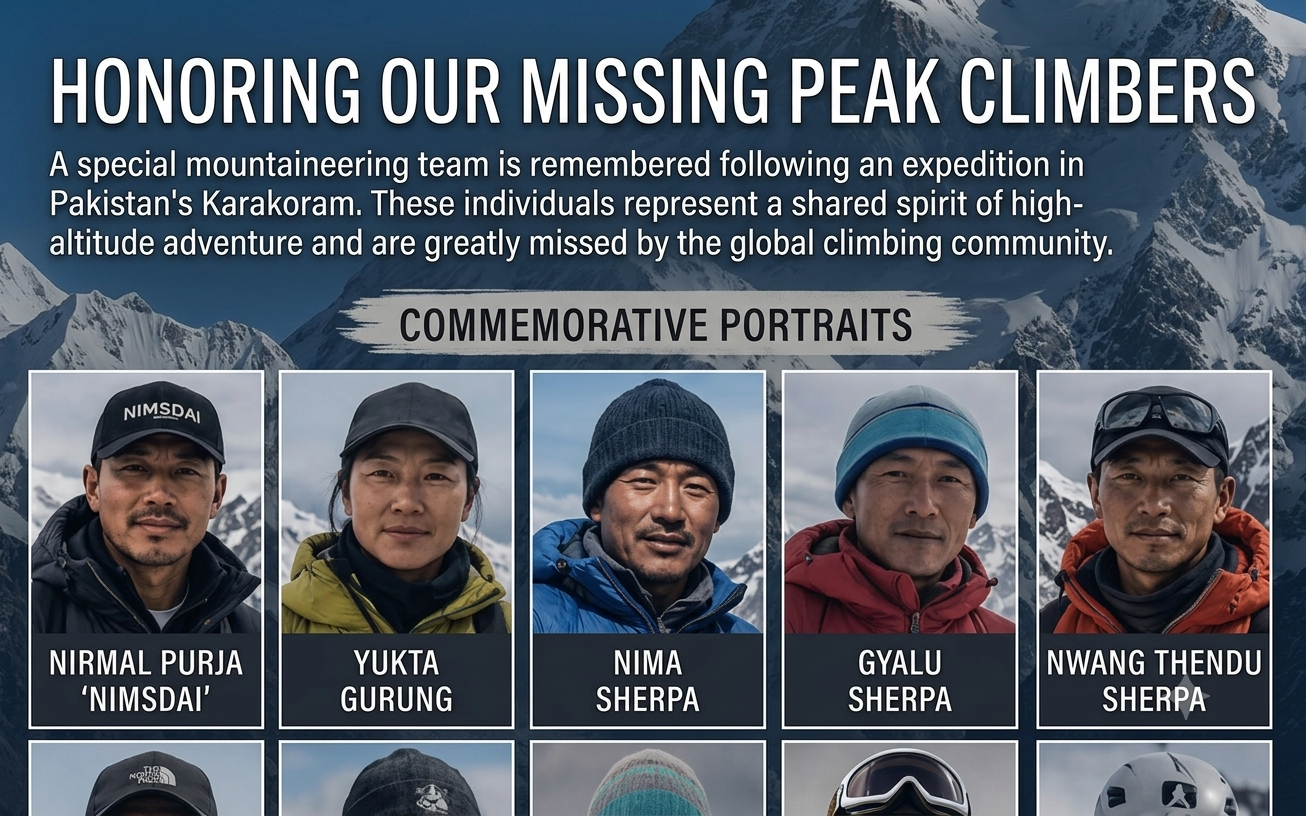
Broad Peak Avalanche: Nirmal Purja and the Ethics of Risk
The high-altitude landscape of the Karakoram remains one of the most unforgiving environments on Earth, a fact underscored by the Broad Peak avalanche involving Nirmal Purja and his team during the July 30–31, 2026 window.
As search-and-rescue operations mobilize, the incident has reignited a fierce debate regarding the sustainability of rapid-ascent commercial expeditions. Nirmal "Nims" Purja, a figure who redefined speed climbing with his "Project Possible," now finds his legacy under intense scrutiny. This intersection of operational hazards and corporate accountability raises critical questions: Can the pursuit of commercial records coexist with the stringent safety standards required for 8,000-meter peaks? Understanding this event requires a nuanced look at real-time logistics and the historical controversies surrounding the Nirmal Purja case.
Operational Realities: The July 2026 Search-and-Rescue Mission
Reports from the Alpine Club of Pakistan indicate that the Broad Peak avalanche occurred near the Bottleneck transition, a region notorious for objective hazards. Initial operational data suggests that multiple rope-fixing teams were active when the slide was triggered. Unlike previous seasons, the 2026 window has been characterized by volatile thermal shifts, complicating the Karakoram safety constraints that guides must navigate.
Rescue efforts, coordinated by Askari Aviation and ground teams, faced immediate hurdles due to high-altitude winds and visibility. While the technical cause of the avalanche is attributed to seasonal snowpack instability, industry analysts are looking closely at team density and the timing of the summit push. In commercial mountaineering, the margin for error is razor-thin, and the pressure to deliver results for high-paying clients often clashes with conservative safety windowing.
The Nirmal Purja Case: A Legacy of Risk and Allegation
To understand the current tension, one must look back at the documented history of the Nirmal Purja case. Beyond his climbing feats, Purja has faced significant legal and ethical challenges.
Critics argue that the "Nimsdai" brand promotes a high-risk culture that prioritizes marketing and speed over the traditional ethos of alpine self-sufficiency. Legal-safe phrasing is essential here: while Purja has denied many of these allegations, the cumulative effect of permitting disputes and client safety grievances has led to increased calls for oversight by the Nepal Department of Tourism. These historical controversies now color the public and professional perception of any incident involving his teams.
High-Altitude SAR: What the Rescue Effort Actually Involves
Beyond the sheer shock of the news, the mechanics of high-altitude search and rescue (SAR) in the Karakoram are dauntingly complex. At 6,600 meters, getting aerial support to missing climbers isn't as simple as firing up a chopper and flying in.
In their technical analysis of the incident, Aero Connect Nepal broke down the operational realities that rescue pilots face on Broad Peak:
- Extreme Altitude Constraints: Above 6,000 meters, the air is thin enough that rotor blades lose significant lift and engines produce much less power.
- The Hover Challenge: Trying to perform a hoist rescue or maintain an Out of Ground Effect (OGE) hover requires maximum engine output. Pilots often have to strip non-essential gear just to keep the aircraft light enough for a brief rescue window.
- Dependence on Telemetry: Because fuel margins are so tight, visual aerial sweeps across vast ice fields are rarely effective. Rescue teams rely almost entirely on real-time satellite tracking data to pinpoint exact coordinates before weather windows close.
Intersection of Corporate Accountability and Safety
The Broad Peak avalanche Nirmal Purja incident serves as a case study for the modern expedition management crisis. High-altitude hazards are inevitable, but the legal and moral responsibility of the expedition leader is to mitigate avoidable risks. When commercial interests drive teams into dangerous windows, the line between an "act of God" and corporate negligence becomes blurred. Moving forward, the industry must address whether current liability waivers are sufficient or if a more robust, international regulatory body is needed to govern 8,000-meter peaks.
Further Reading
- Alpine Club of Pakistan Official Reports
- UIAA - International Climbing and Mountaineering Federation Ethics Code
- The American Alpine Club: State of Mountaineering Safety
- International Journal of Environmental Research and Public Health: High-Altitude Risk Management
Collaborate with me
Contact me directly:
apsan@apsan.com.np